






If you have noticed a bump along the bridge of your nose, you are certainly not the only one. Many people become aware of it when they see their side profile in photos or in the mirror.
For some, it is purely an appearance concern. For others, there may also be questions about breathing, particularly if there has been a past injury. Any decision about treatment should begin with a proper assessment of both how the nose looks and how it functions.
A dorsal hump, often referred to as a dorsal hump nose or simply a nose bump, is a visible rise along the bridge of the nose. Dorsal hump reduction is a surgical technique used to smooth and refine the bridge of the nose when a visible bump affects overall facial balance.
Through this blog, you will understand what a dorsal hump is, why it develops, and whether it affects appearance or breathing. You will also learn about treatment options, recovery expectations, and how to make an informed decision about dorsal hump reduction.
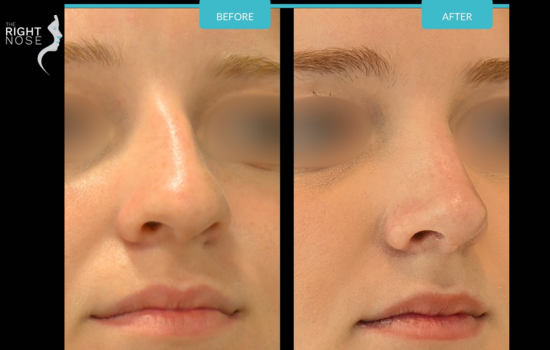
A dorsal hump is a raised area on the bridge of the nose caused by excess bone, cartilage, or both. It can be subtle and only visible in certain lighting, or more prominent from the side profile.
For many people, it is inherited and becomes noticeable as the nose matures. In other cases, it develops after an injury, especially if the nasal bones or cartilage heal in a slightly uneven or raised position.
A hump does not automatically mean something is “wrong”. Many faces carry a hump beautifully. The decision to treat it is usually personal, based on what feels harmonious to you.
Most dorsal humps come from one of these patterns.
In many cases, the shape of the nose is inherited. A hump may become more visible as the nose grows during the teenage years and usually settles once facial growth is complete.
A blow to the nose, a fracture, or repeated minor injuries can affect how the bones and cartilage heal. Even if the incident happened years earlier, it can leave a lasting bump along the bridge.
A changing nose shape in adulthood should be assessed properly. While most concerns are benign, a consultation helps rule out other causes and ensures the safest plan.
This is a common question, and the honest answer is that attractiveness is not one fixed template. Some people like a strong bridge and feel it adds character. Others feel it distracts from their eyes or overall facial proportions.
In consultation, the more useful question is usually: What profile and front view feel most like you? Some patients want a completely straight bridge. Others prefer a softer reduction that keeps a slight natural contour.
A dorsal hump on its own does not usually block the airflow. Breathing issues are more often linked with internal structure, such as a deviated septum, valve narrowing, or turbinate enlargement.
That said, a dorsal hump and airway concerns can exist together, especially after trauma.
Surgical correction helps in reshaping the bone and cartilage to change the bridge permanently. This technique depends on anatomy and goals.
Closed Rhinoplasty
Open Rhinoplasty
A high-quality plan considers stability. After hump reduction, the surgeon may need to support the middle portion of the nose to avoid a pinched look and to protect airflow.
For selected cases, dermal filler can smooth the profile by filling around the hump rather than removing it. Results are temporary and require maintenance. It is not the right option for everyone, and it does not correct internal breathing issues.
Because the nose has important blood vessels, filler should only be performed by an experienced clinician who understands nasal anatomy and safety.
People usually notice the biggest difference in profile. The bridge looks smoother, and the nose can appear more in balance with the forehead and tip.
A good result looks believable. Many patients also ask to preserve their identity, including ethnic features or a family resemblance, while still refining the bridge.
Recovery varies between individuals and depends on the extent of reshaping.
Most people go through recovery in clear stages.
You will receive detailed guidance about daily activities, exercise, wearing glasses, and nasal care. Follow-up visits are an important part of recovery and help ensure the nose heals as planned.
Dorsal hump procedure looks simple on paper, but the bridge is a structural zone. The most expert surgeon is someone who truly understands both appearance and airflow, and who can explain your options clearly.
Dr Levente’s dual focus on form and function is particularly relevant here, because cosmetic change should not come at the cost of nasal support or breathing.
When seeking surgery with Dr Levente Deak in Dubai, patients value:
In Dubai, Dr Levente Deak approaches nasal surgery with attention to both structure and facial harmony. He is a European Board Certified ENT surgeon and a dual board-certified facial plastic surgeon in the USA and EU, licensed in the UK and UAE, with more than 15 years devoted exclusively to facial procedures, including rhinoplasty and nasal airway surgery, his work centres on careful planning, refined technique, and thorough follow-up care.
A dorsal hump can be a small feature that you barely notice, or the one thing you cannot stop focusing on in photos. Either way, you deserve clear guidance, realistic planning, and a result that still looks like you.
If you are considering dorsal hump nose surgery in Dubai, book a consultation with Dr Levente Deak to discuss your profile goals, nasal structure, and breathing.
His work reflects his background in ENT surgery as well as facial aesthetics. Each plan is designed around the individual patient rather than following a standard formula.
Book an in-person assessment to make a decision about treatment.
A dorsal hump is the bump you can see on the bridge of the nose. A deviated septum is an internal bend in the wall that divides the nostrils, and it can make breathing harder. You can have one without the other, although injuries sometimes cause both.
The removed hump does not return as a new growth. What can happen is early swelling that makes the bridge look uneven for a while. In a small number of cases, healing bone can form a firm ridge that needs review during follow-up.
Most people do it for appearance. If there is also a septum problem or valve narrowing, those can be corrected in the same operation, so the outcome is cosmetic and functional.
Many people feel presentable in about 10 to 14 days, once bruising settles and the splint is off. Swelling continues to settle quietly for weeks after that
No. Filler smooths the profile by adding volume around the hump, so the nose can look straighter, but the hump is still there underneath. Surgery reshapes the bone and cartilage, and the change is permanent.
A dorsal hump can absolutely be attractive. Surgery should be a choice, not a correction of a “flaw”. A natural result comes from proportion, structural support, and a plan that suits your face, not trends.
Valiant Hospital City walk - 13th St Al Wasl - Dubai - United Arab Emirates
Cosmesurge Hospital,Jumeirah Beach Road Burj Al Arab - Umm Suqeim - Jumeirah 3 - Dubai – UAE