






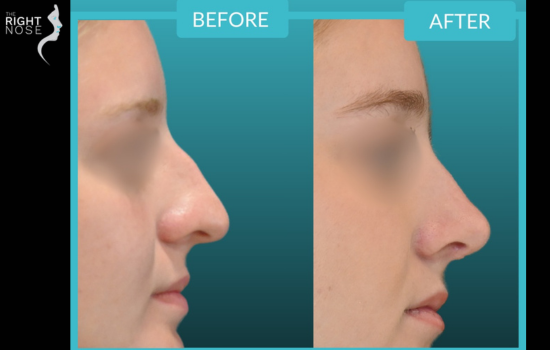
A dorsal hump on the nose can be a source of self-consciousness for many people. It may appear as a bony and cartilaginous prominence along the nasal bridge, visible in profile and sometimes altering the overall facial balance.
Understandably, patients seeking rhinoplasty for hump nose often assume that complete removal of the hump will produce the most refined result. However, in clinical practice, why total hump removal will not the best choice is a critical discussion, one that requires a careful understanding of nasal anatomy, facial proportions, and long-term structural stability.
As Dr Levente Deak explains in consultations, the goal of surgery is not simply to remove a bump, but to create harmony while preserving function. Over-resection can lead to aesthetic and structural problems that are far more difficult to correct.
A dorsal hump is usually composed of:
The prominence may be genetic, related to ethnicity, or develop after trauma. It is rarely an isolated feature. Most patients with a hump also have subtle variations in nasal length, tip projection, or bridge height.
Removing too much tissue without considering these factors risks flattening the bridge or destabilising the middle vault of the nose.
Globally, rhinoplasty remains one of the most commonly performed facial cosmetic procedures. According to international aesthetic surgery statistics, hundreds of thousands of rhinoplasties are performed each year, with dorsal hump reduction being a frequent indication.
Yet revision rhinoplasty rates range between 5% and 15%, often due to over-resection or contour irregularities.
At first glance, the idea of complete flattery might sound attractive. In reality, this look doesn’t suit everyone; it may look totally straight. Here is why complete removal can be problematic:
Proportion is central to facial aesthetics. A softly defined dorsal line frequently contributes to a natural, well-balanced profile. Completely flattening the bridge may create an appearance that feels the nose is too long and even the midface look longer overdone. In men, especially, retaining a modest dorsal heightstrength tends to maintain a more authentic and masculine look.
In addition to supporting breathing, the upper lateral cartilages support the airway and contribute to the dorsal contour. Aggressive resection without proper reconstruction can narrow the internal nasal valve, the narrowest part of the nasal airway. This may cause breathing difficulty or massive retraction of nostrils and later on too muck nostrill will be visible.
Over-removal of cartilage and bone leads to depression of the nasal bridge later on.
The nose is not merely cosmetic. Its internal structures warm, humidify, and filter air. Disturbing structural support can compromise airflow.
For these reasons, modern dorsal hump reduction focuses on preservation and reshaping rather than simple removal.
Assessment before surgery to remove partial bump on nose involves:
Computer imaging may be used to discuss realistic outcomes. The decision is individualised. Sometimes the ideal approach involves partial reduction combined with subtle tip refinement or structural grafting.
In many cases, a conservative reduction creates a smooth dorsal line without flattening the natural contour.
Aspect | Total hump removal | Conservative dorsal hump reduction |
Aesthetic outcome | Risk of over-flattened profile | Maintains natural contour |
Structural support | Higher risk of instability | Preserves middle vault strength |
Breathing impact | Possible airway narrowing | Lower functional risk |
Revision risk | Increased if overdone | Generally lower |
Suitability | Selected cases only | Most common approach |
This comparison highlights why total hump removal will not the best choice for many patients.
When patients ask how to fix dorsal hump, the answer depends on the anatomy. In a typical procedure:
The emphasis is on controlled reshaping, not aggressive excision.
All surgery carries risk. With dorsal hump surgery, potential complications include:
Patience is very essential during the recovery process. Initial swelling improves within 2–3 weeks, but subtle changes keep occurring over 6–12 months.
It’s Important to understand that swelling can temporarily exaggerate or conceal dorsal contour changes in early recovery.
If you are exploring rhinoplasty for a hump nose, consider the following:
It’s helpful to show images of noses you like, particularly from the side, as this gives clarity about your preferences. However, every face is different, and surgical decisions must respect your individual structure. The most successful outcomes happen when expectations are realistic and aligned with careful surgical assessment.
When discussing why total hump removal will not the best choice, the key message is balance. The nose sits at the centre of the face. Its structure affects both appearance and breathing. Complete flattening of a dorsal hump may seem like a straightforward solution, but it can compromise proportion, stability, and long-term function.
Modern dorsal hump reduction is about refinement, not eradication. A carefully measured, conservative approach often produces the most natural and enduring results.
By prioritising structural integrity and facial harmony, Dr Levente Deak aims to deliver outcomes that look unoperated, proportionate, and functional.
No. Complete removal is not always advisable. In many cases, a conservative dorsal hump reduction creates a more natural and proportionate result. Removing too much bone and cartilage can flatten the nasal bridge excessively and may compromise structural support.
If too much tissue is removed, the nose can lose its natural contour and, occasionally, its internal support. This may lead to visible collapse in the middle section or changes in airflow. Carefully refining the hump, instead of eliminating it, can give more defined results.
Yes, it can. The dorsal hump is closely related to the upper lateral cartilages, which help maintain the internal nasal valve, the narrowest part of the airway. Over-resection without proper reconstruction may narrow this area and affect airflow. Experienced surgeons take measures to preserve or restore airway support.
The decision is based on facial proportions, nasal anatomy, skin thickness, and the patient’s aesthetic goals. Surgeons assess the entire facial profile rather than focusing solely on the hump. Often, partial reduction combined with subtle contouring provides the most balanced result.
Partial reduction smooths the dorsal line while maintaining structural integrity and natural contours. Complete removal aims to completely flatten the bridge, which may increase the risk of instability, contour irregularities, or a scooped appearance if not carefully managed.
No, once the excess bone and cartilage are appropriately reshaped, the hump does not grow back. However, the final outcome cannot be predicted due to swelling during early recovery. Final results typically refine over 6–12 months.
Excessive removal can result in a saddle nose deformity (a visible depression along the bridge), breathing issues, or aesthetic imbalance. Correcting over-reduction usually involves a more complex revision rhinoplasty surgery.
Valiant Hospital City walk - 13th St Al Wasl - Dubai - United Arab Emirates
Cosmesurge Hospital,Jumeirah Beach Road Burj Al Arab - Umm Suqeim - Jumeirah 3 - Dubai – UAE