





Two Types of Rhinoplasty Explained – Cosmetic vs Functional
Two Types of Rhinoplasty Explained – Cosmetic vs Functional
Are you considering rhinoplasty but unsure whether you need surgery for appearance, breathing, or both? Understanding the two types of rhinoplasty can help you know what each procedure aims to achieve and how your surgeon may approach your treatment.
Rhinoplasty can reshape the external appearance of the nose, improve nasal airflow, or address both concerns during the same procedure. The right approach depends on your nasal structure, breathing function, facial proportions and individual goals. Dr Levente Deak takes a tailored approach to rhinoplasty, assessing both the form and function of the nose to develop a treatment plan suited to each patient.
What are the two types of Rhinoplasty?
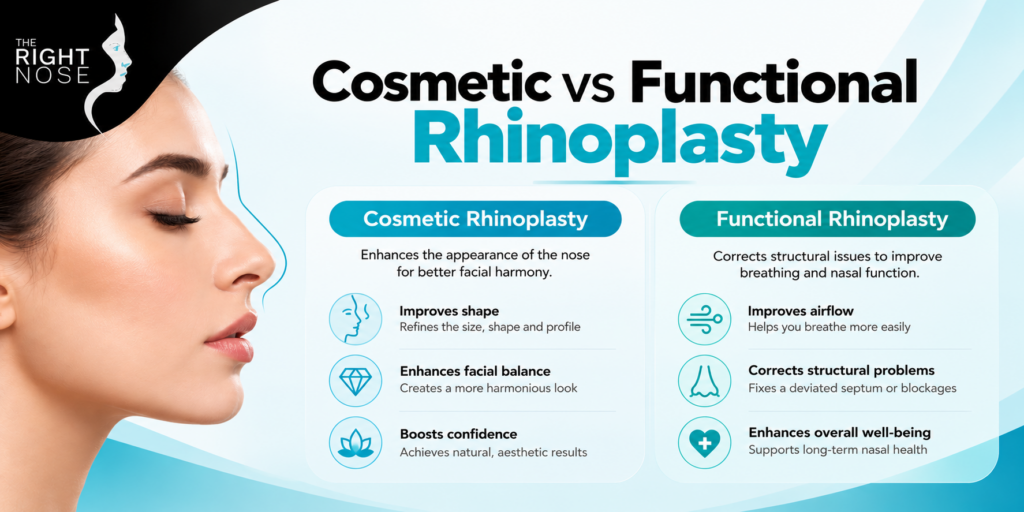
The two types of rhinoplasty commonly discussed are cosmetic rhinoplasty and functional rhinoplasty. Although they have different primary goals, appearance and function are closely connected. Changes to the internal nasal structures can affect the external shape, while structural issues that affect breathing may also influence how the nose looks.
1. Cosmetic Rhinoplasty
Cosmetic rhinoplasty focuses primarily on changing the appearance of the nose. The aim is to improve balance and proportion while maintaining a natural relationship between the nose and the rest of the face. Patients may consider cosmetic rhinoplasty if they are concerned about:
- A prominent nasal hump or bump
- A wide or narrow nasal bridge
- A bulbous, drooping or asymmetric nasal tip
- A nose that appears too large or small for the face
- Uneven nostrils
- Facial imbalance caused by nasal shape
The procedure may involve reshaping the nasal bones, cartilage, tip or other structures to create a more balanced appearance. The specific technique depends on the patient’s anatomy and desired changes.
2. Functional Rhinoplasty
Functional rhinoplasty is performed to address structural problems that interfere with nasal breathing. These problems may result from natural anatomy, injury, a deviated septum, weakened nasal structures or nasal valve narrowing. Common concerns include:
- Persistent nasal blockage
- Difficulty breathing through the nose
- A deviated or crooked septum
- Nasal valve collapse
- Narrow nasal passages
- Structural changes following nasal trauma
- Previous nasal surgery that affected airflow
Functional rhinoplasty may involve reconstructing or reinforcing internal nasal structures to improve airflow while maintaining or restoring appropriate nasal shape. Procedures such as septoplasty or turbinate reduction may also be considered when clinically appropriate.
Cosmetic vs Functional Rhinoplasty: Key difference?
Both procedures involve the nose, but their primary goals are different. Cosmetic rhinoplasty focuses mainly on appearance, while functional rhinoplasty addresses structural problems that may affect breathing.
Aspect | Cosmetic Rhinoplasty | Functional Rhinoplasty |
Primary goal | Changes the appearance, shape or proportions of the nose | Improves nasal function and addresses structural problems affecting breathing |
Reason for treatment | Concerns about the size, shape, symmetry or proportions of the nose | Nasal obstruction, restricted airflow or other structural breathing problems |
What may be addressed | Nasal bridge, tip, nostrils, size, shape or overall facial balance | Deviated septum, nasal valve narrowing or collapse, enlarged turbinates and other structural causes of obstruction |
Main benefit | May improve the appearance and balance of the nose in relation to the face | May improve airflow and make nasal breathing more comfortable |
Can they be combined? | Yes. Cosmetic concerns can sometimes be addressed during functional surgery | Yes. Functional and cosmetic concerns may be treated during the same procedure when appropriate |
Types of Rhinoplasty implants: What you should know
Some rhinoplasty procedures require additional structural support. Depending on the patient’s anatomy and surgical plan, cartilage grafts may be used to reinforce or reshape parts of the nose.
When patients search for types of rhinoplasty implants, it is important to understand that rhinoplasty does not always involve an implant. Surgeons may use the patient’s own cartilage, often from the septum, ear or rib, when grafting is needed. The appropriate material depends on the specific structural problem being addressed.
Cosmetic and Functional Rhinoplasty procedure and benefits
Although the goals differ, both procedures require careful assessment of the nasal anatomy.
Cosmetic rhinoplasty procedure
The surgeon evaluates the nose in relation to the rest of the face before developing a surgical plan. Depending on the desired changes, surgery may involve reshaping the nasal bones, cartilage, bridge or tip. Potential benefits may include:
- Refining the size, shape or proportions of the nose
- Smoothing a prominent bump or irregularity on the nasal bridge
- Improving the shape or definition of the nasal tip
- Addressing certain forms of nasal asymmetry
- Creating a greater balance between the nose and other facial features
- Helping some patients feel more comfortable with their appearance
Functional rhinoplasty procedure
Functional surgery begins with identifying the structural cause of the breathing problem. Treatment may involve correcting the septum, supporting weakened cartilage or addressing nasal valve narrowing. Potential benefits may include:
- Improving airflow through the nasal passages
- Addressing structural causes of nasal obstruction
- Making nasal breathing more comfortable
- Supporting easier breathing during everyday activities
- Potentially improving comfort during sleep when nasal obstruction contributes to breathing difficulty
Addressing functional and cosmetic concerns together when both are present. In some cases, cosmetic and functional rhinoplasty can be performed together, allowing the surgeon to address both breathing and appearance during one treatment plan.
Cosmetic and Functional Rhinoplasty recovery time
Recovery varies depending on the surgical technique, extent of correction and individual healing.
After rhinoplasty, swelling and bruising are common during the early recovery period. Most patients need some time away from strenuous activities, while swelling can continue to settle gradually over the following weeks and months.
The functional and cosmetic rhinoplasty recovery time may differ depending on how much internal reconstruction and external reshaping are required. Your surgeon should provide specific activity and recovery instructions based on your procedure.
Which type of Rhinoplasty is right for you?
The answer depends on what you want to address. If your main concern is the appearance of your nose, cosmetic rhinoplasty may be appropriate. If you have persistent breathing difficulties caused by a structural problem, functional rhinoplasty may be considered.
Some patients have both aesthetic and functional concerns. In these cases, a combined approach may be discussed after a detailed examination of the nasal airway and external structure.
Why choose Dr Levente Deak for Rhinoplasty?
Choosing a rhinoplasty surgeon involves considering their training, experience and approach to both the appearance and function of the nose. Dr Levente Deak focuses on nasal and facial surgery, with an approach tailored to each patient’s individual features.
- Dual board certification: Dr Levente Deak is a European Board-Certified ENT Surgeon and USA and EU Dual Board-Certified Facial Plastic Surgeon.
- 20+ years of experience: He has more than 20 years of surgical experience focused exclusively on the face, including rhinoplasty and nasal airway correction.
- Focus on form and function: His approach considers both the appearance and function of the nose when planning surgery.
- Individualised nasal planning: Each nose is assessed in relation to the patient’s facial features rather than applying the same approach to every patient.
- Experience in nasal surgery: His practice focuses extensively on rhinoplasty and other nasal procedures, including cosmetic, functional and revision rhinoplasty.
- Natural facial harmony: Treatment is planned to create a nose that fits with the individual’s existing facial proportions and features.
Find the right Rhinoplasty treatment for you
Whether your concern is the appearance of your nose, difficulty breathing, or both, choosing the right approach starts with understanding the difference between cosmetic and functional rhinoplasty. Dr. Levente Deak can assess your nasal structure, discuss your concerns and explain which approach may be appropriate for you.
From improving nasal appearance to addressing structural problems that affect breathing, your treatment plan should reflect your individual anatomy and goals.
Book a consultation with Dr Levente Deak to discuss your rhinoplasty options and take the next step towards a treatment plan tailored to you.
Some Quick FAQs
The two main types are cosmetic and functional rhinoplasty. Cosmetic rhinoplasty primarily changes the appearance, proportions or shape of the nose, while functional rhinoplasty addresses structural problems that interfere with breathing. In some cases, both goals can be addressed during the same operation. The appropriate approach depends on your nasal anatomy, symptoms, facial proportions and desired outcome, which should be assessed during a consultation.
Cosmetic rhinoplasty focuses mainly on improving the appearance of the nose, such as its shape, size, tip or proportions. Functional rhinoplasty is intended to correct structural problems that affect nasal breathing, such as a deviated septum or nasal valve narrowing. However, the two procedures can overlap because structural corrections may affect appearance. Some patients, therefore, undergo a combined procedure to address both concerns.
Yes, it is possible at times to carry out both cosmetic and functional rhinoplasty during the same operation when a patient has both aesthetic worries and breathing difficulties. In this situation, a surgeon might reshape the nose while at the same time addressing the internal structural problems which restrict air flow. Performing the two procedures together enables both objectives to be incorporated into a single surgical plan, though it will depend on the patient’s anatomy, symptoms and general health.
Rhinoplasty does not always require an implant. When additional structural support is needed, surgeons may use cartilage grafts from the patient’s own septum, ear or rib, depending on the procedure. In selected cases, other materials may be considered. The choice depends on the area requiring support, the amount of correction needed and whether the surgery is primary or revision rhinoplasty.
Recovery varies according to the surgical technique and extent of correction. Swelling and bruising are common during the early healing period, while the nose can continue changing as swelling gradually settles over several months. Functional recovery may also depend on the internal structures treated. Your surgeon will provide individual guidance on returning to work, exercise and other activities based on your procedure and healing.