





Deviated Septum Surgery Recovery Timeline
Deviated Septum Surgery Recovery Timeline
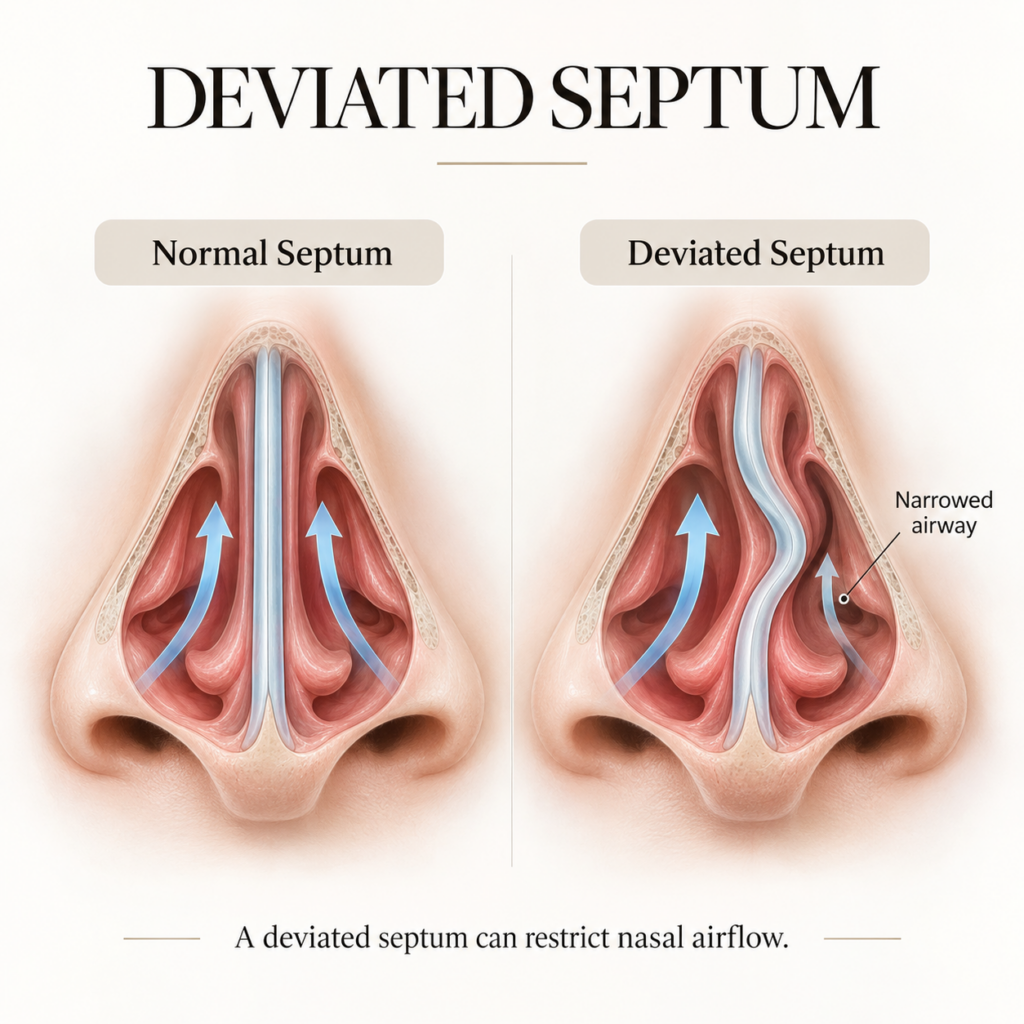
Breathing through your nose should feel effortless. However, when the nasal septum, the thin wall that separates the two nasal passages, is significantly off-centre, it can lead to chronic congestion, difficulty breathing, snoring, sleep disturbances, and recurring sinus infections.
While the procedure itself is relatively straightforward and simple , understanding the recovery from deviated septum surgery can help you feel more confident and prepared. Knowing what to expect at each stage of deviated septum surgery recovery takes a lot of the stress out of the process and makes for a more comfortable experience overall.
This guide has been put together for patients considering treatment with Dr Levente Deak, walking through the recovery timeline, healing milestones, day-to-day care tips, and knowing when to reach out for medical attention.
Deviated Septum Surgery Recovery timeline at a glance
Procedure: Septoplasty to correct a deviated septum and improve nasal airflow. Surgery Time: Usually 30–90 minutes. Recovery Period: Most patients feel significantly better within 1 weeks. Back to Work: Typically 2-5 days after surgery. Exercise: Light activities first; strenuous workouts are usually avoided for 2 weeks. Complete Healing: Internal tissues continue healing over the following weeks and months. Long-Term Benefits: Easier breathing, less congestion, improved sleep, and better overall comfort. |
What is a Deviated Septum?
The nasal septum is made of cartilage and bone and divides the nose into right and left passages. When the septum is displaced or crooked, airflow can become restricted.
Research suggests that many adults have some degree of septal deviation, although not everyone experiences symptoms. It’s more common than most people realise. Studies estimate septal deviation affects up to 80% of the population, though only a proportion experience symptoms severe enough to actually require treatment.
Common symptoms
A deviated septum may cause:
- Persistent nasal congestion
- Difficulty breathing through one or both nostrils
- Frequent sinus infections
- Nosebleeds
- Facial pressure
- Snoring
- Poor sleep quality
- Mouth breathing
When symptoms significantly affect daily life, Septoplasty may be recommended.
What is Septoplasty?
Septoplasty involves surgically straightening and repositioning the septum, with the aim of making it easier for air to flow through the nose the way it should.
During surgery, the surgeon works through the nostrils, making internal corrections to the cartilage and bone without disturbing the external appearance of the nose in most cases.
Benefits of Septoplasty
Patients may experience:
- Better nasal breathing
- Reduced sinus-related symptoms
- Improved sleep quality
- Reduced reliance on nasal medications
- Straight nose
- Better shape
The deviated septum surgery success rate is well established; many studies report significant improvements in breathing and overall quality of life for patients who go ahead with the procedure.
The first 24 hours after surgery-
Immediately after surgery, patients spend time in a recovery area before returning home.
It is normal to experience:
- Mild bleeding or drainage
- Nasal congestion
- Sensitivity in teeth
- Swelling inside the nose
- Temporary difficulty breathing through the nose
Quick Fact- Most discomfort following Septoplasty comes from swelling and congestion rather than surgical pain. |
Recovery timeline: What happens week by week?
One of the most common questions patients ask is what septoplasty recovery looks like day by day. While every patient has a different pattern of healing, the following timeline reflects typical recovery patterns.
Days 1–3: Rest and initial healing
Right after treatment, the first few days are centred on bringing swelling down and keeping the surgical site well protected.
You may notice:
| Helpful measures include:
|
Many patients find that congestion is worse during this period before gradually improving.
Days 4–7: Swelling begins to improve
By the end of the first week, discomfort often starts to decrease.
Patients may experience:
- Reduced drainage
- Less facial pressure
- Gradual improvement in energy levels
- Continued nasal congestion
Splints placed during surgery may come out around this time, though exactly when depends on what your surgeon advises. Breathing may still feel restricted because internal tissues remain swollen.
Week 2: Noticeable progress
For most of the patients, the second week is when things start to shift significantly.
Many patients report:
- Better airflow
- Less swelling
- Improved comfort
- Return to normal daily activities
At this stage, most people can return to work if their job does not involve heavy physical activity.
Weeks 3–4: Returning to routine
By the third and fourth weeks:
- Most visible swelling has improved
- Nasal passages feel more open
- Breathing becomes easier
- Sleep quality may improve
Patients can usually resume light exercise after receiving clearance from their surgeon.
One to three months: Continued internal healing
The deeper tissues continue to heal long after symptoms improve.
During this stage:
- Nasal airflow stabilises
- Residual swelling decreases
- Surgical results become more apparent
Many patients notice the full benefits of recovery from deviated septum surgery during this period.
Six months and beyond
Internal healing can continue for several months.
By this stage, most patients experience:
- Stable breathing improvement
- Long-term symptom relief
- Better sleep and exercise tolerance
Did You Know?More than 250,000 septoplasty procedures are performed in the United States each year, making it one of the most commonly performed surgeries for improving nasal airflow in patients with a deviated septum. Reference- Carrie S, O’Hara J, Fouweather T, et al. BMJ. 2023;383:e075445. Reference link- https://www.bmj.com/content/383/bmj-2023-075445?utm_source=chatgpt.com |
How can you tell where you are in recovery?
Consider the following checklist:
Ask yourself:
- Is nasal congestion gradually improving?
- Has bleeding stopped?
- Are you breathing more easily than before surgery?
- Is swelling decreasing each week?
- Are you sleeping more comfortably?
If the answer is yes to most of these questions, healing is likely progressing as expected.
Practical tips for a smoother recovery
Following your surgeon’s instructions remains the most important factor in recovery.
Helpful Deviated Septum surgery recovery tips
- Keep your head elevated while sleeping.
- Avoid strenuous activity during the early healing phase.
- Do not blow your nose unless advised.
- Use saline rinses if recommended.
- Stay well hydrated.
- Avoid smoking and secondhand smoke exposure.
- Attend all scheduled follow-up appointments.
When should you contact your surgeon?
While complications are uncommon, medical attention may be needed if you experience:
- Heavy bleeding
- Fever
- Severe pain not controlled by medication
- Increasing swelling
- Persistent foul-smelling drainage
- Sudden worsening of breathing
Why do many patients choose Dr Levente Deak for Septoplasty?
Choosing a surgeon for nasal airway surgery is about more than correcting anatomy. Sleep, exercise, energy levels, and everyday comfort, patients want a specialist who understands just how much breathing problems can affect all of these things. Dr Levente Deak combines extensive surgical experience with a personalised approach to help patients achieve meaningful improvements in nasal function.
Focused expertise in nasal surgery With decades of experience in facial plastic and ENT surgery, Dr Deak has dedicated a significant part of his practice to treating nasal obstruction and breathing concerns. | A personalised treatment plan No two noses are exactly alike. Each patient receives a thorough evaluation aimed at pinpointing the specific cause of their symptoms and finding the most appropriate treatment approach for their situation. |
Function comes first The primary goal is to improve airflow and restore comfortable breathing while preserving the natural structure and appearance of the nose. | Advanced surgical techniques Dr Deak utilises modern surgical methods designed to address structural problems precisely while supporting a smoother recovery process. |
Your path to easier breathing
Understanding the recovery timeline can make the healing process feel far less overwhelming. While the first week often involves congestion, swelling, and temporary discomfort, most patients notice steady improvement within the first two weeks and continued benefits over the following months.
Recovery from deviated septum surgery requires patience, but for many individuals, the outcome is worth the wait. Improved airflow, easier breathing, better sleep, and enhanced quality of life are among the benefits that Septoplasty can provide when performed for the right reasons.
If chronic nasal obstruction is affecting your daily activities, a consultation with Dr Levente Deak can help determine whether Septoplasty is the right treatment option for you and what you can realistically expect during recovery.
Some Quick FAQs
One to two weeks is typically how long it takes for most patients to get past the daily activity limitations, though complete internal healing is a more gradual process that can take several months.
Congestion and swelling are to be expected in the first few days, but breathing and overall comfort tend to improve gradually as the weeks go on.
Many patients return to work within 5–10 days, depending on their job duties and individual recovery progress.
Yes. Keep your head elevated, avoid strenuous activity, stay hydrated, and follow all post-operative instructions provided by your surgeon.
Most patients who undergo septoplasty experience significant improvements in nasal breathing and symptom relief, and the success rate reflects that.
Septoplasty is designed to improve internal nasal function and typically does not change the external appearance of the nose.