





Rhinoplasty swelling stages and recovery: What to expect
Rhinoplasty swelling stages and recovery: What to expect
Rhinoplasty can refine the shape of the nose, improve breathing, and create better facial balance. But one question almost every patient asks after surgery is: “How long will the swelling last?”
Rhinoplasty recovery does not happen overnight. Although the major swelling and bruising improve within the first few weeks, the nose continues to heal, settle, and refine gradually over the following months. Knowing what to expect during the different stages of rhinoplasty swelling often helps patients feel calmer, more reassured, and better prepared during the recovery journey.
According to Dr Levente Deak, proper healing after rhinoplasty is not only about appearance. It is also about preserving nasal function, supporting tissue recovery, and allowing the nose to settle naturally into harmony with the rest of the face.
Why does swelling happen after Rhinoplasty?
Swelling after rhinoplasty is completely normal and happens as part of the healing process. During surgery, the nasal bones, cartilage, and surrounding tissues are carefully adjusted and reshaped. As the nose starts recovering, temporary swelling and inflammation can appear around the nose and nearby areas of the face.
Swelling should not be viewed as a problem or a complication. It is a natural healing response that helps deliver important nutrients, oxygen, and collagen-building factors to the surgical area. These healing elements play an important role in strengthening and supporting the nose as recovery progresses.
Clinical studies on wound healing suggest that a substantial proportion of tissue strength returns during the first few weeks after surgery, with continued strengthening and remodelling occurring over several months.
The amount of swelling varies from person to person and may depend on:
- Skin thickness
- Surgical technique
- Whether cartilage grafts were used
- Open or closed rhinoplasty approach
- Individual healing response
- Revision rhinoplasty versus primary rhinoplasty
- Individual genetic healing characteristics
- Whether you naturally bruise easily
- The extent of reconstruction performed during surgery
- Whether the nasal bones were reshaped
Most swelling improves, although subtle swelling at the nasal tip may last longer than other areas.
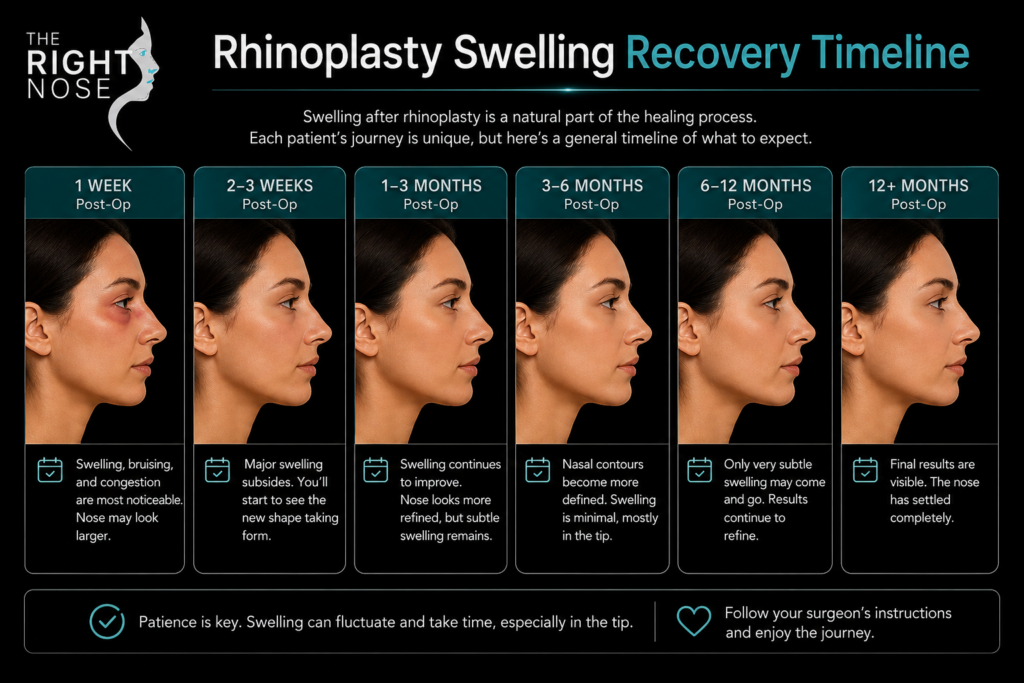
Rhinoplasty swelling stages and recovery timeline
Immediately after surgery
Right after surgery, patients usually notice:
- Swelling around the nose and cheeks
- Bruising under the eyes
- Nasal congestion
- Mild discomfort or pressure
- A splint placed over the nose
Breathing through the nose may feel difficult during the first few days because of internal swelling. Keeping the head elevated and resting properly are very important during this stage.
1 week Rhinoplasty swelling stages
The first week is often the most noticeable stage of recovery.
Days 1 to 3
This is when swelling usually reaches its peak. Patients may experience:
- Puffiness around the eyes
- Bruising that spreads toward the cheeks
- Tightness around the nose
- Temporary blocked breathing sensation
Although the swelling can appear dramatic, this stage is completely expected after surgery. Patients who tend to bruise easily may notice more visible bruising around the eyes and cheeks, while others may experience very little bruising despite undergoing a similar procedure.
Days 4 to 7
By the end of the first week:
- Bruising usually starts to fade slowly
- The feeling of pressure becomes less noticeable
- Nasal splints are commonly removed during this stage
- Facial swelling begins settling down gradually
Many patients start feeling more comfortable physically at this point, although the nose may still look noticeably swollen.
Most patients feel comfortable returning to work, social activities, and being seen in public approximately seven days after surgery. Once the splint has been removed, any remaining swelling is usually mild enough that it is not particularly noticeable to others.
Recovery Stage | What Patients Commonly Notice |
Days 1–3 | Maximum swelling and bruising |
Days 4–7 | Slight reduction in swelling |
End of Week 1 | Splint removal and visible early improvement |
Weeks 2 to 4 after Rhinoplasty
During this period, patients usually see a major improvement in their appearance.
Common changes include:
- Reduced bruising
- Easier nasal breathing
- Less tenderness and pressure around the nose
- A clearer and more refined nose shape
Most patients usually feel ready to return to work and attend light social gatherings during this stage. However, intense exercise, gym workouts, and heavy lifting should still be avoided for some time.
Even though the nose may look significantly better externally, internal healing is still continuing.
1 to 3 months after Rhinoplasty
This stage is often when patients begin appreciating the early refinement of their results.
At this point:
- Most swelling has improved
- The bridge appears more defined
- Facial balance becomes clearer
- Nasal breathing improves further
However, mild swelling around the nasal tip may still persist. This is especially common in patients with thicker skin or revision rhinoplasty procedures.
6 to 12 months after Rhinoplasty
The later stage of rhinoplasty recovery takes time and steady healing.
Over time:
- The remaining swelling slowly improves
- The shape of the nose becomes more refined
- The skin settles around the new nasal structure
- The final rhinoplasty results start becoming clearer
For some patients, tip refinement may continue for up to one year.
Timeline | Healing Progress |
1 Week | Major swelling and bruising |
1 Month | Noticeable improvement |
3 Months | Most swelling reduced |
6–12 Months | Final refinement and definition |
Why some patients experience more swelling than others
No two rhinoplasty recoveries are exactly alike. The amount of swelling seen after surgery depends on several factors, including individual healing patterns and the complexity of the procedure.
Genetics play a significant role in recovery. Some patients naturally swell more than others, while some experience very little swelling throughout the healing process. Similarly, individuals who bruise easily before surgery are often more likely to develop visible bruising afterwards.
The extent of surgical work performed also has a direct impact on swelling. Minor refinements generally result in less swelling than complex reconstructive procedures that require extensive reshaping of cartilage and bone.
When major reconstruction is required, additional tissue dissection and skin elevation may be necessary, which can lead to more prolonged swelling during recovery.
If the nasal bones need to be reshaped or fractured during surgery, swelling over the upper bony part of the nose may take up to six months to fully settle.
How to speed up Rhinoplasty recovery
Although healing cannot be rushed completely, proper aftercare can support a smoother recovery and reduce unnecessary swelling.
Recovery tips
- Sleep with your head slightly raised to help minimise swelling
- Avoid touching, pressing, or rubbing the nose during healing
- Keep yourself well hydrated throughout the recovery period
- Follow all post-operative instructions given by your surgeon carefully
- Avoid smoking and alcohol while your nose is healing
- Stay away from heavy exercise and intense physical activity initially
- Eat nutritious meals that help support proper healing and recovery
- Attend all follow-up appointments advised by your surgeon
Additional measures can also help support the healing process:
- Avoid excessive sun exposure during the first few months after surgery
- Stop smoking and avoid alcohol consumption, as both can slow recovery and contribute to prolonged swelling
- The earlier these habits are stopped, the better the healing environment for the nose
- Follow your surgeon’s taping instructions carefully throughout recovery
- Post-operative massage techniques may also be recommended as part of your personalised recovery protocol
Cold compresses around the eyes may help during the first few days, but they should never be placed directly on the nose unless advised by the surgeon.
Factors that influence Rhinoplasty recovery time
Every patient heals differently. Some factors that may affect recovery include:
- Skin thickness
- Age and general health
- Open versus closed rhinoplasty
- Revision rhinoplasty procedures
- Surgical complexity
- Individual healing characteristics
Patients with thicker skin may notice that swelling takes a little longer to settle, especially around the tip of the nose.
Does Open Rhinoplasty cause more swelling than Closed Rhinoplasty?
A common misconception is that closed rhinoplasty always causes less swelling than open rhinoplasty. In reality, this is not necessarily true.
The degree of swelling is influenced far more by the amount of surgical work performed than by the surgical approach itself. Both open and closed rhinoplasty can heal exceptionally well and produce similar swelling patterns when performed appropriately.
Factors such as tissue handling, reconstruction requirements, bone work, skin thickness, and individual healing characteristics have a much greater impact on swelling than whether the procedure is performed using an open or closed technique.
When should you contact your surgeon?
Some swelling after rhinoplasty is completely normal. However, certain symptoms should never be ignored and need prompt medical attention:
- Severe bleeding
- Sudden worsening pain
- Fever or signs of infection
- Rapid increase in swelling
- Persistent breathing difficulty
Prompt communication with the surgeon helps ensure a safe recovery process.
Why patients trust Dr Levente Deak for Rhinoplasty in Dubai
People considering rhinoplasty in Dubai usually want natural-looking results along with proper nasal function. Dr Levente Deak is known for his balanced approach, combining his ENT background with advanced facial plastic surgery experience to improve both appearance and breathing.
What sets his approach apart
- European Board-Certified ENT Surgeon
- Dual USA and EU Board-Certified Facial Plastic Surgeon
- More than 20 years of experience in facial and nasal surgery
- Fellowship training in advanced rhinoplasty and ENT procedures
- Focus on improving both nasal appearance and breathing function
- Personalised surgical planning to suit each face naturally
- Extensive experience in cosmetic, functional, and revision rhinoplasty
- Actively involved in international research and medical education
- Known for refined, natural-looking rhinoplasty results that preserve facial character
Patients also appreciate his detailed aftercare guidance and personalised approach throughout recovery.
A smoother recovery starts with the right surgical care
Healing after rhinoplasty takes time, steady care, and following the right recovery instructions. As the swelling slowly settles during each stage of recovery, knowing what is normal can help patients feel more relaxed and reassured throughout the healing process.
With experienced surgical planning, careful technique, and detailed follow-up care, patients can achieve natural-looking results that support both appearance and breathing function.
If you are considering rhinoplasty in Dubai or would like expert guidance about the rhinoplasty recovery process, consult Dr Levente Deak to discuss a personalised treatment plan designed around your facial structure, goals, and long-term results.
Some Quick FAQs
Most swelling improves within the first few weeks, but subtle swelling may continue improving for up to 12 months.
Many patients return to non-strenuous work within 1 to 2 weeks, depending on healing and comfort.
Yes. Revision rhinoplasty often involves more complex tissue work, which may lead to longer-lasting swelling.
The nasal tip contains delicate soft tissues and has slower circulation, which makes swelling last longer in this area.
Patients are usually advised to avoid pressure from glasses for several weeks after surgery unless specifically approved by the surgeon.
Keeping the head elevated, avoiding strenuous activity, staying hydrated, and following post-operative instructions carefully may help reduce swelling.
Yes, mild uneven swelling is quite common during recovery. Different areas of the nose can heal at different speeds, but the swelling usually settles gradually as the tissues recover over time.
Most patients begin noticing their refined nose shape within a few months, although the final result usually becomes fully visible between 6 and 12 months after surgery.